Dopamine and Boredom Tolerance in Kids
If your child melts down the moment screens are put away or groans "I'm so bored" within minutes of quiet time, you're not imagining things — and you're definitely not alone. Something real is happening...
Dopamine and Boredom Tolerance in Kids
If your child melts down the moment screens are put away or groans "I'm so bored" within minutes of quiet time, you're not imagining things — and you're definitely not alone. Something real is happening...
Why kids struggle with unstimulating activities now
If your child melts down the moment screens are put away or groans “I’m so bored” within minutes of quiet time, you’re not imagining things — and you’re definitely not alone. Something real is happening in their brain, and it has a name: low boredom tolerance.
Understanding the connection between dopamine and boredom tolerance in kids can help you stop blaming yourself (or your child) and start making small shifts that actually work. Here’s what the science says — and what you can do about it.
What Dopamine Has to Do With Boredom
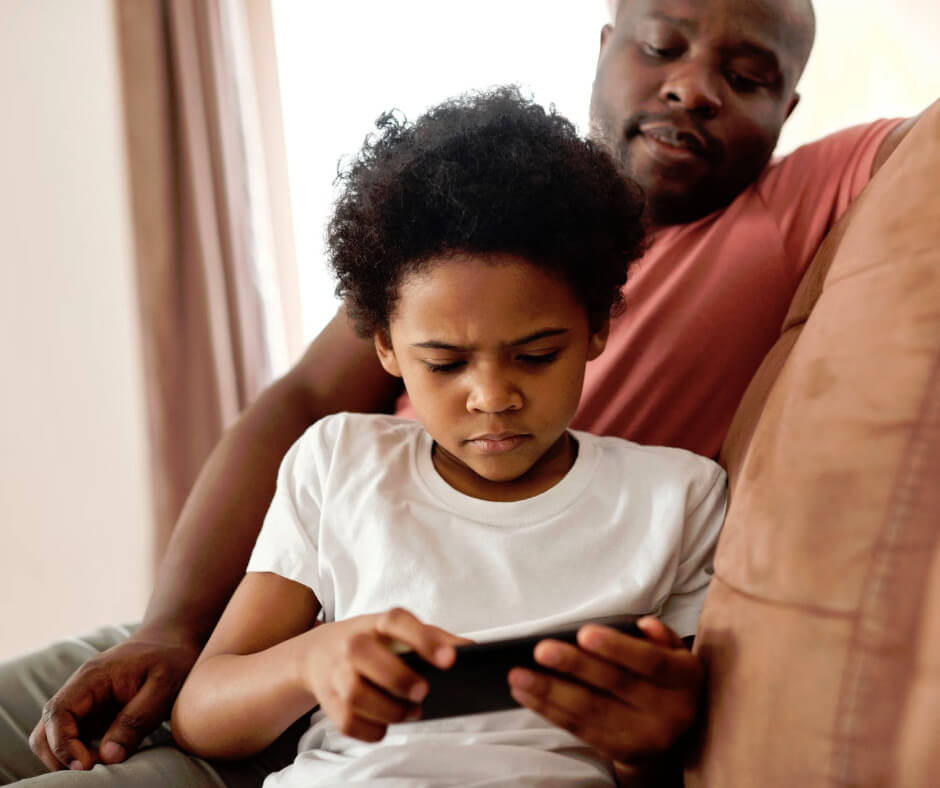
Dopamine is a brain chemical — a neurotransmitter — that drives motivation, pleasure, and the desire to seek out new experiences. When a child plays a video game, watches YouTube, or scrolls through short-form videos, their brain gets a rapid flood of dopamine. According to Building Brains Together(opens in new tab), this constant high-stimulation lifestyle raises the brain’s dopamine baseline — meaning quieter, everyday activities start to feel flat and unrewarding by comparison.
The result? Drawing, reading, or simply sitting outside starts to feel genuinely uncomfortable to a child’s brain, not just unexciting. It’s not laziness or defiance — it’s neurological contrast.
Why Some Kids Struggle More Than Others
Not every child feels boredom the same way. As we explored in our deep dive on how screens affect the developing nervous system(opens in new tab), children’s brains are especially sensitive to reward signals during childhood and adolescence.
Children with ADHD tend to have naturally lower dopamine levels to begin with, which makes this even more pronounced. According to They Are The Future(opens in new tab), lower dopamine levels cause the brain to constantly seek stimulation, making it significantly harder to sustain attention on tasks that feel monotonous. And according to Children and Screens(opens in new tab), people with ADHD tend to have high levels of boredom proneness — and boredom episodes can feel genuinely anxiety-provoking, not just mildly annoying.
This doesn’t mean a child who hates boredom automatically has ADHD. But it does mean that for some kids, the discomfort is much more intense than parents realize.
Why Boredom Is Actually Good for Kids
Here’s the counterintuitive truth: boredom is a skill, and it’s one worth building. Research published in PMC (National Library of Medicine)(opens in new tab) suggests that children who learn to tolerate and move through boredom develop better coping skills and stronger mental health over time.
Boredom is where creativity, imagination, and emotional regulation get their workout. A few ways to gently rebuild that tolerance:
- Start small — 10–15 minutes of unstructured, screen-free time daily
- Offer open-ended materials like blocks, art supplies, or outdoor space — not scheduled activities
- Resist the urge to immediately fill the silence; let the discomfort breathe
- Validate their feelings: “I know this feels boring — your brain will find something interesting soon”
- Model it yourself by sitting quietly without your own phone nearby
How Dr. Chheda Thinks About This at Harmony Pediatrics
At Harmony Pediatrics, we see the whole child — not just a behavior to correct. When a child struggles to sit still, tolerate quiet, or engage without a screen, Dr. Chheda takes the time to understand what’s happening beneath the surface: sleep, nutrition, nervous system regulation, and yes, dopamine patterns all play a role.
If your child seems to be really struggling with boredom, restlessness, or emotional dysregulation, you’re always welcome to connect with Dr. Chheda at Harmony Pediatrics(opens in new tab) for a thoughtful, unhurried conversation about what’s going on.
Boredom isn’t the enemy — it’s actually one of the quietest teachers your child will ever have.
❤️ Join Our Harmony Family
Discover personalized pediatric care that grows with your family. Our membership program offers exclusive benefits, priority scheduling, and direct access to our dedicated team of pediatricians.

❤️ Join Our Harmony Family
Discover personalized pediatric care that grows with your family. Our membership program offers exclusive benefits, priority scheduling, and direct access to our dedicated team of pediatricians.