Holistic Pediatricians
Welcome to our Holistic Pediatricians category page, where we celebrate a whole-child approach to healthcare. These blog posts are dedicated to exploring how holistic pediatrics integrates mind, body, and spirit to support your child’s growth and development in every way.
Holistic pediatric care goes beyond addressing symptoms—it’s about understanding your child as a unique individual and providing personalized care that promotes their overall well-being. From nutrition and preventative care to emotional health and natural remedies, this category offers insights into how holistic care can nurture your child’s health and happiness. Dive into these posts to learn more about how a holistic approach can make a difference for your family.
Dr. Chheda – A little bragging about myself – I have been named one of the top docs in Atlanta yet again! This is a nomination that comes from fellow doctors that recognize doctors in the area. So my fellow physicians in Atlanta have recognized me as one of the top pediatricians in the Atlanta area. Yay! So if you’re looking for a pediatrician who will take the time to listen to you, to hear you out, to give you advice, who incorporates integrative, holistic care into their treatment plan, who tries to prevent disease rather than treat it – if that’s the kind of pediatrics that you’re looking for, check me out. HarmonyPeds.com – I’m Doctor Shafali Chheda. Transcriptions from AI and may not be 100% accurate
Teenagers and acne – this is what I tell all my teenagers. Acne is caused by hormones and by bacteria. There’s not much I can do about hormones. You’ve got hormones, I’ve got hormones, everybody has hormones. Bacteria – anything that touches your face has got bacteria on it, so you wanna try to keep everything off your face. You would think that bangs are hiding your acne – bangs actually cause acne. Get everything off of your face. Get your hair off your face, get your phone off your face. I know teenagers don’t really talk like this anymore. Even glasses – if you can switch to contacts, that would definitely help any acne that you have at your temple area. But the most important thing is you also have to wash your face twice a day, morning and night, to get rid of all that bacteria. So you have to use a good face wash specifically made for acne. There’s several different brands out there, they’re perfectly good. Just make sure it says face wash for acne. Do that twice a day, get all the bacteria off your face, and that is the first step in getting rid of acne. If your acne worsens, then talk to your pediatrician for other solutions. #TeenAcne #AcneTreatment #SkinCareForTeens #AcnePrevention Transcriptions from AI and may not be 100% accurate
Dr. Chheda – Teen Acne part 2. Now, whenever a teenager complains about acne, one of the first things I ask about is “How do you wash your face?” And lately I have been flabbergasted by the answer. You know what they’re telling me? “Oh, I wash with water, no soap.” Okay, I try not to make judgments, but this one – come on! You need soap!
Acne is caused by bacteria. Soap is the only way you’re gonna kill the bacteria and get rid of the oil on your face that the bacteria live on.
Now I don’t care what kind of soap you use. If it says face wash, it’s gonna be gentle enough for your skin. Use face wash, use Dove soap, use Ivory, use beef tallow soap – use something! But you gotta use soap.
And if you’re worried about your eyes burning, then use Johnson and Johnson Baby shampoo, no tear formula. You can wash your face with that as well too, and it’s not gonna burn your eyes. But please, wash your face with soap and water twice a day to get rid of all the bacteria, to get rid of all of the oil on your face that the bacteria thrive in. That is the most basic thing to do if you want to get rid of acne.
Parents of young kids, make sure your child knows how to wash their face with soap and water before you let them become independent. And parents of teenagers, send this to your kid. There is somebody that really needs to hear this.
Dr. Chheda – We all need human contact. We actually need physical contact. Kids, toddlers are very easy – they’re always coming up to you, giving you a hug, you’re hugging them, you’re holding them, you’re carrying them.
What about that moody teenager? You know, the one that’s got the hoodie on and like this, and doesn’t want to talk to anybody and just “hmm” – grunts all day long? What do you do with your moody teenager who doesn’t want to be touched? Well, there are some ways to touch that are appropriate and can still give them that physical human contact that they need. You need to make it more of a habit to go to them. Go to your teenager instead of screaming around the house for them. Go to them and tap them on their shoulder to get their attention. That’s one way.
Play video games with them. You know, fist bump them. Do a high five. These are all ways that you can give your teenager physical contact, the contact that they need, without feeling like you have to hug them all the time.
But yes, you do need to make the effort to go to your teenager and to accomplish this. We all need human contact. We all need physical contact in order to feel loved.
Goodbye stink and hello clean! Have you ever looked back at your kids after you pick them up from sports and you smell something kind of nasty? Windows down on the car ride home!
That’s right! So it’s just really important to make sure that your kids, especially your teens, are taking care of their hygiene. Absolutely. So making sure they shower every day with soap and water and a loofah and scrubbing. Yes! Make sure they change out their underwear every day, their socks. 100%!
And once they’re around 8 or nine, introduce the concept of deodorant. There’s a lot of aluminum-free, kid-friendly deodorant options and antiperspirants that they can use. Absolutely! With the laundry, make sure that you’re using a deodorizer with the detergent. Sometimes there are a wide range of dye-free ones that are a little bit more environmental and skin-friendly for some of our sensitive skins. Absolutely!
Even the hypoallergenic options are good too. Absolutely! But yeah, make sure they stay nice and clean. So stay fresh, stay healthy, and stay clean!
Dr. Chheda – The whole point of swaddling a baby is to keep their arms by their sides. That’s what you want to do, because if their arms come up and they hear a loud noise, they startle and then that’s what wakes them up.
It’s that startle reflex that newborns have that wakes them up. But if you can keep their arms down and by their side tight, they won’t be able to wake up. And the best part is, if they are down by their side tight and they can’t even roll over, then you know your baby is sleeping flat on their back and you don’t have to worry about it. You can get a good two to three hours sleep out of a newborn baby if you swaddle them tight.
What is the best kind of swaddle? I like the muslin cloths. You can get them nice and tight. They’re not so thick, so you don’t have to worry about your baby overheating.
So learn how to do a proper swaddle, get the arms down right and tight, and then your baby will sleep for a good two to three hours.
Dr. Chheda – Around six to eight weeks of life, there is a barrier that forms that protects the entire brain from the rest of the body. This is called the blood-brain barrier. It basically is a filter system that, for the most part, can filter out viruses and bacteria and other elements from reaching the brain. It’s protecting the brain. Before this age, before six to eight weeks of age, the barrier has not formed, and so anything that’s in the blood can go to the brain – any bacteria, any virus – and that can cause meningitis within 48 hours. That’s why we want babies to stay away from other people for the first six to eight weeks. You know, their immune system is really, really weak, and this is what we’re talking about – the blood-brain barrier.
After six to eight weeks, once the barrier is formed, then babies can go out and they can be around other people. You want to still use common sense. You know, if somebody is coughing and sneezing, don’t let them hold your baby. But you want to try to keep your baby protected in those first six to eight weeks of life. If your baby has any symptoms in those first six to eight weeks of life – any fever, any runny nose, anything – we as pediatricians take it very, very seriously because we know that it can be fatal within 48 hours. And we do not want that to happen. So we do a complete workup if your baby has any symptoms in those first weeks of life.
To prevent that, just keep your baby indoors. You can take a walk outside, but just not around people, okay? So keep that in mind – that’s what we talk about, the blood-brain barrier.
Dr. Chheda – If your child wakes up after a nap or in the middle of the night and they have a barky cough – it’s a really dry cough and it really does sound like a dog barking – that could be a sign of croup. Croup is very normal, very common in kids under the age of six. But those kids under the age of two, we really worry about because that cough indicates that their airway is actually closing up and they’re having a hard time breathing. And we don’t want that airway to close up where they stop breathing.
What are some things that you can do, especially in the middle of the night? Anything to help your child relax, relax those muscles, keep them calm. Make sure they’re well hydrated. You can open up the freezer, open up the freezer and have them breathe in that cold air. It’s the equivalent of putting ice on something that’s swollen. They need that cold, cold air to breathe in to be able to decrease the swelling that’s going on in their airway, and that can help.
And if they’re under the age of 2, please either call 911, call your pediatrician, but get help.
How was your week last week? It was pretty good, pretty busy. You know, we had lots of sports, some activities to do. Then oh, our local school PTA hosted a nice community event – a movie night for the kids, families, free of charge. But of course, like, the kids have all the fun, PTA does all the work. Are you involved? I used to be super involved when my kids were in elementary and middle school, and they always loved it when I was there. They would see me, they would get all excited. Of course, now with high schoolers, they kind of look the other way. But you have little ones, so how are you doing? I know you’re pretty involved. I am pretty involved, and I encourage all parents to get involved in your local community. The PTA is just another community opportunity. You get to know what’s going on with the school. You get to be there not only for your student and your children, but also the other needs of students and children in the area. You get to support the teachers because, unfortunately, it’s crucial – teachers don’t have a lot of support.
Yeah, they need things, they want things. They just don’t have the manpower always to do it. And I think the most important thing is both the teachers and the parents and the community – ultimately everyone wants a healthy child. And I do believe that advocating for your children is a part of keeping them healthy. Absolutely. So look into your school’s PTA. Be there for your kiddos and their teachers, and be a prime support system. Absolutely.
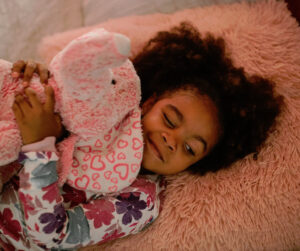
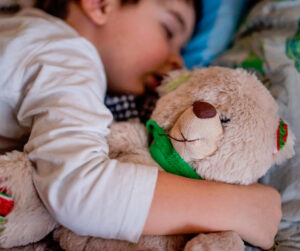
Dr. Chheda – 🧸 We all want to feel loved and cuddled, soft and snuggly. Of course we do! Kids want to as well too. That’s why they have so many stuffed animals, and it’s okay for kids to have stuffed animals when they’re sleeping on their bed.
⚠️ But just remember, stuffed animals can harbor allergens, lots of dust mites. So all you want to do is just wash them at least once a week. Put them in the dryer on high heat for 20 minutes to kill all the dust mites.
💚 Kids are sleeping with the animals for 8, 10, 12 hours at a time, so they’re breathing everything in. They can comfort themselves, they can cuddle themselves, but you do want to make sure that the stuffed animals are clean. So just stick them in the dryer for 20 minutes on high heat once a week, and that should kill all the dust mites.