
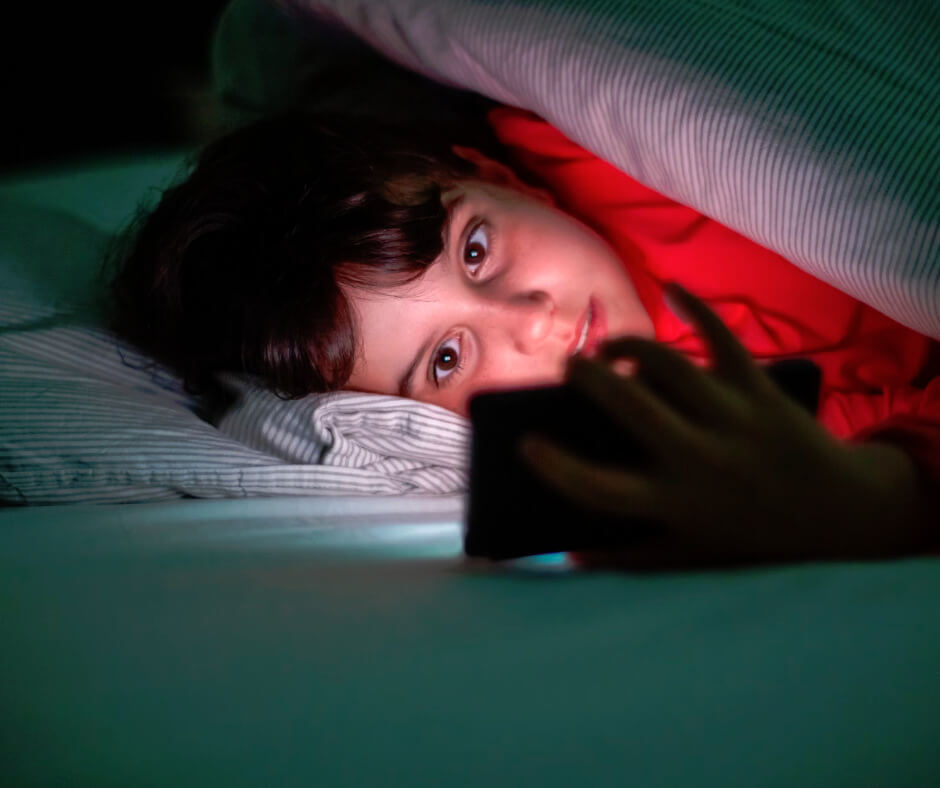
Sleep and Screens in Children
If your child has trouble winding down at night, their screen habits may be quietly working against them. The connection between sleep and screens in children is real — and easier to address than most...
Sleep and Screens in Children
If your child has trouble winding down at night, their screen habits may be quietly working against them. The connection between sleep and screens in children is real — and easier to address than most...
How Late-Night Tech Disrupts Bedtime Routines
If your child has trouble winding down at night, their screen habits may be quietly working against them. The connection between sleep and screens in children is real — and easier to address than most parents think.
Sleep is one of the most powerful tools in a child’s health toolkit. When screens chip away at it night after night, the effects show up everywhere — in moods, focus, behavior, and even immune health.
Why Screens Make It Harder to Fall Asleep
The biggest culprit is blue light — the wavelength emitted by phones, tablets, TVs, and laptops. According to the Sleep Foundation, exposure to blue-enriched light at night suppresses melatonin, the hormone that signals to the brain that it’s time to sleep. Children are especially sensitive to this effect because their eyes let in more light than adults’ do.
This melatonin delay doesn’t just push bedtime later — it shortens overall sleep duration and fragments the deep, restorative stages of sleep that kids need most for growth and brain development.
What the Research Shows
The science here is consistent and clear. Research published in the NIH’s PMC journal on screen time and sleep in children links screen use — particularly before bed — to sleep disorders in children as young as preschool age. A separate NIH review on youth screen media habits and sleep found that bedtime screen use is one of the strongest predictors of poor sleep across all age groups.
The American Academy of Pediatrics, via HealthyChildren.org, recommends turning off all screens — TVs, tablets, phones, and laptops — at least 60 minutes before bedtime, and keeping devices out of children’s bedrooms entirely at night.
How Poor Sleep Shows Up in Your Child
Parents often treat sleep struggles and behavior struggles as separate problems. They rarely are. When children aren’t getting enough quality sleep, you may notice:
- Difficulty concentrating at school
- Increased irritability or emotional meltdowns
- Trouble falling or staying asleep
- Reliance on screens to fall asleep (a cycle that worsens over time)
- Lower energy and weakened immune response
As the Nicklaus Children’s Hospital Digital Safety Alliance points out, poor sleep driven by screens affects not just a child’s nights — it shapes their days in measurable ways.
Practical Steps to Protect Sleep
You don’t need a perfect system — just a consistent one. A few small shifts can make a meaningful difference:
- Set a firm “screens off” time at least one hour before bed
- Charge devices outside the bedroom overnight
- Replace screen wind-down with calming alternatives: reading, stretching, or quiet conversation
- Create a simple, predictable bedtime routine your child can count on
- Make it a family conversation, not just a rule — kids respond better when they understand why
It also helps to understand the bigger picture. We’ve explored how screens affect the developing nervous system in a separate post — and sleep is one of the most significant places that impact lands.
When to Talk to Your Pediatrician
Most families can make real progress with consistent boundaries and a calmer bedtime routine. But if your child is chronically tired, struggling to sleep despite screen-free evenings, or showing signs of anxiety around bedtime, it’s worth a deeper conversation.
At Harmony Pediatrics, Dr. Chheda takes the time to look at the whole child — sleep, screen habits, nervous system health, and daily rhythms — not just a single symptom. Families navigating these challenges are warmly invited to connect with Dr. Chheda at Harmony Pediatrics for a personalized, unhurried conversation about what’s going on at home.
Sleep is not a luxury. For children, it’s the foundation everything else is built on.
❤️ Join Our Harmony Family
Discover personalized pediatric care that grows with your family. Our membership program offers exclusive benefits, priority scheduling, and direct access to our dedicated team of pediatricians.

❤️ Join Our Harmony Family
Discover personalized pediatric care that grows with your family. Our membership program offers exclusive benefits, priority scheduling, and direct access to our dedicated team of pediatricians.